
At a time when consumers increasingly embrace green mobility solutions, it is not electric cars but hybrids that are taking the lead, as automotive sales data indicate. Since January, 64,097 electric cars have been sold compared to 266,465 hybrids, according to data from the Ministry of Road Transport and Highways' Vahan dashboard. Hybrid car sales have surged from 4.42 per cent of the 4.1 million cars sold in calendar year 2022 to 7.2 per cent this year.

Sales volume for compact sedan Dzire Tour came in at 2,068 units in June.

Passenger vehicle wholesales in India rose to a record high in October as companies pushed dispatches to dealers to cater to the enhanced demand in the festive season. The overall passenger vehicle wholesales in October rose to 391,472 units, up 16 per cent from 336,679 units in the same month last year. Last month witnessed the highest-ever dispatches of passenger vehicles in the domestic market by Maruti Suzuki India and Mahindra & Mahindra.

The ongoing elections and overall subdued market sentiment continue to affect the sales momentum

However, sales of mini segment cars, including Alto and WagonR, declined 7.9 per cent to 25,524 units from 27,712 in the year-ago month

The Mahindra's Scorpio-N becomes the first body-on-frame chassis SUV to secure a five-star Global NCAP rating.

Auto Expo 2023 may not trigger a fresh rally in automobile stocks, say analysts, as this year's edition lacks participation from major listed players. It is also owing to the focus on electric vehicles (EVs), a segment where four-wheelers have minuscule market share. "In the passenger vehicles (PV) segment, Maruti Suzuki India and Tata Motors are the only listed players.

Maruti's sales of the compact segment comprising Swift, Estilo, Ritz, Dzire and Baleno went up by 9.9% to 45,579 units

Open order books in February breach 700,000; wait period for some models exceed a year.

Market leader Maruti Suzuki is putting finishing touches to its plan of finding its feet in what is being hailed as a battle of epic proportions in India's fastest-growing passenger vehicle segment, reports Arindam Majumder.

Sales of the compact segment comprising Swift, Estilo, Ritz, Dzire and Baleno increased by 4.1 per cent to 50,362 units

Leading automakers Maruti Suzuki India, Hyundai and Tata Motors reported a double-digit increase in dispatches to dealers in April as the demand remained robust especially for the sports utility vehicles. The country's largest car maker Maruti Suzuki India (MSI) said its domestic passenger vehicle wholesales rose 13 per cent to 137,320 units last month as against 121,995 units in April 2022. Sales of mini cars, comprising Alto and S-Presso, fell 18 per cent to 14,110 units as compared with 17,137 units a year ago.

Buying a car, particularly a diesel-powered one, is set to pinch the customers' pockets even more from the next financial year, as the second phase of Bharat Stage VI (BSVI) emission norms kicks in. The rules require cars to be compliant with real driving emission (RDE) norms, which measure pollutants emitted by cars while they are being driven on the road, unlike in a laboratory test. The norms may increase the cost of producing diesel vehicles by nearly Rs 75,000 to Rs 80,000, and petrol-powered ones by Rs 25,000 to Rs 30,000, analysts said.

The 2024 Kia Sonet facelift impresses with its comprehensive upgrades, ranging from a refreshed exterior design to advanced safety and technological features.

Suzuki and Toyota are in talks for electric mobility and MSI would continue to access technology from its parent.

In the two wheeler segment, TVS Motor Company reported a 24 per cent increase in total sales at 304,795 units in April.

While Toyota will acquire 4.94 per cent shares of Suzuki, worth $ 908 million, the latter will make a $ 454-million investment in the biggest automaker of Japan. Premium products from the Maruti stable such as the Baleno, Ciaz and Vitara Brezza will be sold under the Toyota brand with small changes.

In the two-wheeler segment, Bajaj Auto reported 31 per cent jump in total sales at 357,883 units in February against 273,513 units in the same month last year.

Domestic passenger vehicle sales could touch a record level of nearly 40 lakh units this year on strong demand and companies finding ways to enhance production despite semiconductor shortage, a senior Maruti Suzuki India official said on Monday. Even as the chip shortage issue has improved compared to a year back, the industry is estimated to have a pending order of around 7.5 lakh units of passenger vehicles with Maruti Suzuki India (MSI) alone having around 4.18 lakh units, company senior executive officer, marketing and sales, Shashank Srivastava told PTI. "I think it would be slightly below 4 million (units mark).

Please send your queries to getahead@rediff.co.in with the subject line 'Cars' and experts from CarJasoos.com will answer your queries related to buying new or used cars.

Amid better semiconductor chip supplies, the Indian automotive industry posted an 8 percent growth in production of vehicles across categories for the month of May, with three-wheelers (20 per cent) and passenger vehicles (16 per cent) leading the pack. Exports, however, dipped 21 per cent at an industry level. The industry also recorded its highest-ever May wholesales of domestic passenger vehicles (334,802 units), riding on high demand for sport utility vehicles (SUVs) and better supplies of semiconductor chips.

Only five of India's top 20 car models have seen a reduction in wait times over the past year.

The country's largest carmaker Maruti Suzuki India on Thursday reported 14 per cent increase in total wholesales at 159,044 units in November. The company had dispatched 139,184 units to dealers in November 2021, MSI said in a statement. Last month, the company's domestic sales rose 18 per cent to 139,306 units as against 117,791 units in November 2021, it added.

The measures government takes next to push economic growth will be the key for automotive sector

'Some of the launches may get deferred due to the semiconductor shortage, which is unlikely to get resolved before the second half of 2022.'

Maruti Suzuki India said its domestic sales rose 10.6 per cent in May.
Passenger vehicle exports from India increased 43 per cent in FY22, with Maruti Suzuki India leading the segment with dispatches of over 2.3 lakh units, as per the latest data by industry body SIAM. The total passenger vehicle (PV) exports stood at 5,77,875 units in 2021-22 fiscal, as compared to 4,04,397 units in 2020-21. Passenger car shipments saw 42 per cent growth at 3,74,986 units, while utility vehicle exports rose 46 per cent at 2,01,036 units during the last fiscal, the data by the Society of Indian Automobile Manufacturers (SIAM) showed.

Dealers across brands are slashing prices by Rs 20,000 to over Rs 1 lakh, depending on the car model.

Right now, the 'Lower D' or LD segment -- which the industry defines as a sedan that costs between Rs 1.5 million and Rs 2 million, is longer than 4.5 metres, and powered by an engine of 1.8 litre or larger -- has barely three cars, all of which have been around for over a decade in India. Nevertheless, at least one foreign auto player is looking to bet big on the segment.
Automakers Maruti Suzuki, Tata Motors, Mahindra & Mahindra and Kia reported robust growth in their vehicle dispatches in the domestic market for August buoyed by festive demand and easing of semiconductor shortage woes. Other manufacturers like Hyundai, Toyota and Skoda also reported growth in wholesales in August as compared with the same month last year. The country's largest automaker Maruti Suzuki India said its domestic passenger vehicle dispatches increased by 30 per cent to 134,166 units in August as compared with 103,187 units in the year-ago month.

Young buyers willing to frequently replace older models with newer ones are boosting bookings and sales.

A lot rides on this new vehicle for Renault, the seventh largest player in domestic passenger vehicle market, as its brand new SUV takes on Maruti Suzuki Brezza, Hyundai Creta and Ford EcoSport.
India's passenger vehicle exports rose by 26 per cent in April-June 2022 aided by enhanced shipments to Latin America and Africa and a low base of the year-ago quarter that was hit by the second wave of COVID-19. As per the latest data released by the Society of Indian Automobile Manufacturers (SIAM), passenger vehicle shipments rose to 1,60,263 units in the April-June period of this fiscal as compared with 1,27,083 units in the same quarter of 2021-22. Passenger car shipments saw an 88 per cent year-on-year growth at 1,04,400 units while utility vehicle exports rose 18 per cent to 55,547 units during the period under review, SIAM data showed.

This major shift in the consumer choice has forced carmakers to field their version of expedient under 4-metre machines in the market.

This major shift in the consumer choice has forced carmakers to field their version of expedient under 4-metre machines in the market.

Whether it is protecting its turf in its core utility vehicle segment through new model launches, or stepping up investment in electric vehicles, the Anand Mahindra-led firm is leaving nothing to chance
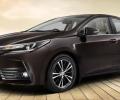
Toyota's India unit will also source two cars manufactured by Maruti Suzuki, the Baleno and Brezza, including their hybrid variants, and in return Toyota will offer its Corolla sedan to Maruti.

The auto major is eyeing 20 per cent of the compact SUV market with the petrol and diesel variants of the XUV300, reports Shally Seth Mohile.

The carmaker has managed to significantly improve its product mix in the past two-three years by successfully launching sedans, utility vehicles and premium hatchbacks.

Top 10 vehicles, value-wise, is dominated by the two players in the market, Maruti Suzuki & Hyundai
